Monroe's Motivated Sequence: Effectiveness and Use
by Stephanie
(Bourbonnais, IL)
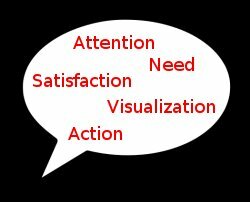
Monroe's Motivated Sequence
Q.How effective is Monroe's Motivated Sequence in public speaking, and do well-known public speakers often use it?
During this campaign season, I'm curious as to the candidates' use of Monroe's Motivated Sequence. Do you think they're aware of this helpful tool, and do they make use out of it? How effective is it as a public speaking tool?
A. First some background: for anyone who doesn't know, Monroe's Motivated Sequence is a speech organization pattern outlined by Alan H. Monroe of Purdue. In persuasive speaking, he found, one needs to cover a number of steps to consistently persuade people. Those steps are:
-
Attention. Just like any speech, you get the attention of the audience.
-
Need. Then you show the audience a problem, or their "need." This is important, because once they are convinced there is a need, they're a lot more likely to accept your solution.
-
Satisfaction. Here's where you bring forward your answer to their need with any needed explanation.
-
Visualization. Then you show the world either with or without your solution. What does it look like? How are they better off with your solution?
-
Action. Finally, there is the call to action. After all, persuasion doesn't matter if your audience doesn't do anything. This is normally something simple and doable within the next 48 hours (any longer and your audience will forget).
Where will you see Monroe's Motivated Sequence?
Everywhere! As for well-known speakers, take a look at
- Television commercials. First they'll show a problem, often doubling as the attention step. Oh no, the kids spilled and left a stain on carpet! Next, they'll satisfy the need - Acme stain remover does the job! Visualization next - watch the stain disappear! Everyone is happy. Action? Buy Acme stain remover on your next trip to the store!
- Authors. Think about most self-help books. First off, there's your problem. Next, their system for fixing it. While it might be split up a bit, throughout the books you'll find 'visualizations' of what your world will be like once you implement their systems. Many of the most popular self-help books (think 7 Habits of Highly Effective People and 4-Hour Work Week) have 'baby steps' at the end of each chapter - can you say action step?!
- Politicians. Their speech writers, at least, know and use this tool.
Monroe's and Politicians
When speaking of politicians, I don't know if they specifically are directly aware of Monroe's... but I can guarantee that their speech writers are! Take a look at possibly the most popular speech of this campaign cycle, Barack Obama's "Yes We Can":
-
-
"There is something happening when men and women in Des Moines and Davenport; in Lebanon and Concord come out in the snows of January to wait in lines that stretch block after block because they believe in what this country can be."
Here is part of the 'attention' step. Compliments are great for getting people to listen to you :-). -
-
"You can be the new majority who can lead this nation out of a long political darkness – Democrats, Independents and Republicans who are tired of the division and distraction that has clouded Washington; who know that we can disagree without being disagreeable; who understand that if we mobilize our voices to challenge the money and influence that’s stood in our way and challenge ourselves to reach for something better, there’s no problem we can’t solve – no destiny we cannot fulfill
This is a kind of 'anti-need' - Obama is portraying something positive, change, but by doing so is saying that the changes haven't happened yet. Washington struggles with "distraction," people are disagreeable, money and influence does stand in the way - problems aren't yet solved, and destinies aren't yet fulfilled. It's more subtle, but Obama is definitely setting up a need. -
-
"And when I am President..."
In a sentence clause in the middle, Obama slips in his solution. Then he explains a bit:"But the reason our campaign has always been different is because it’s not just about what I will do as President, it’s also about what you, the people who love this country, can do to change it."
-
"Yes we can.
"It was the call of workers who organized; women who reached for the ballot; a President who chose the moon as our new frontier; and a King who took us to the mountaintop and pointed the way to the Promised Land.
"Yes we can to justice and equality. Yes we can to opportunity and prosperity. Yes we can heal this nation. Yes we can repair this world. Yes we can."
This, the most powerful part of the speech, is visualization.
-
-
"And so tomorrow ... we will remember that there is something happening in America; ... we will begin the next great chapter in America’s story with three words that will ring from coast to coast; from sea to shining sea – Yes. We. Can."
He ends with the action. Remember. Begin the "next great chapter in America's story." He's set up the visualization so well that he doesn't even need to say the ultimate action explicitly: vote Obama in the primaries. -
Take a look at other speeches from the campaign. They almost all use Monroe's Motivated Sequence, or permutations thereof. Why? Because it works.


